Denmark Work Visa Guide: Pay Limit Scheme, Positive Lists, and How to Move to Copenhagen
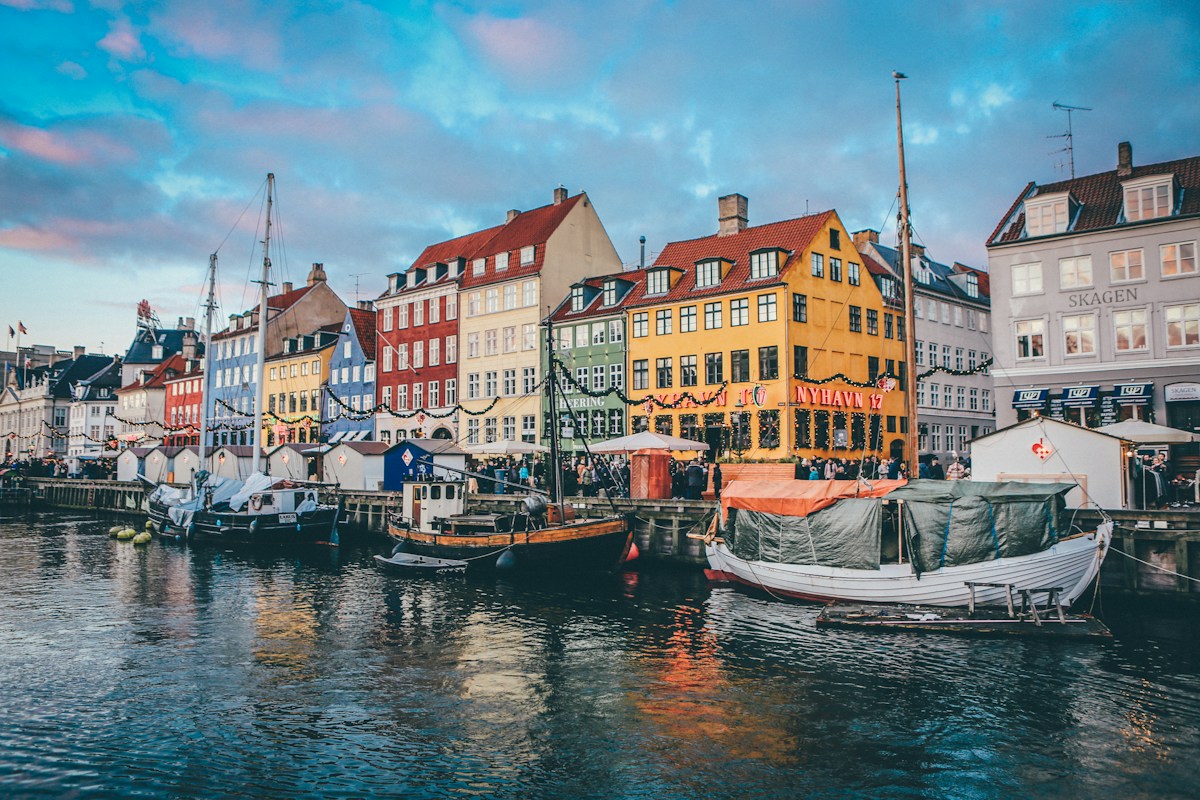
Denmark consistently ranks among the world's happiest countries, with some of the highest wages in Europe, exceptional work-life balance, and a welfare system that covers healthcare, education, and generous parental leave. For skilled workers, it's an increasingly attractive destination — but Denmark's immigration system is notably different from its European neighbors.
There's no digital nomad visa. Denmark opted out of the EU Blue Card directive entirely. There's no golden visa or investor route. Instead, Denmark channels almost all non-EU immigration through employer-sponsored work permits, making the system unusually focused and, in many ways, simpler than alternatives like Germany or the Netherlands.
Here's how Denmark's work visa system actually works — and which route fits your situation.
How Denmark's Work Permit System Works
All work and residence permits for non-EU/EEA nationals are processed by SIRI (the Danish Agency for International Recruitment and Integration). The central portal is nyidanmark.dk, where you submit applications, track status, and find official requirements.
Denmark offers several distinct work permit schemes, each with different eligibility criteria. Unlike points-based systems (Canada, Australia) or lottery systems (US H-1B), Danish work permits are employer-driven: you need a job offer first, then you apply for a permit.
The main routes for workers:
- Pay Limit Scheme — salary-based, no education requirement
- Supplementary Pay Limit Scheme — lower salary threshold with labour market conditions
- Positive List (Higher Education) — shortage occupations requiring a degree
- Positive List (Skilled Work) — shortage occupations for tradespeople
- Fast-track Scheme — expedited processing through certified employers
- Researcher Permit — for research positions at Danish institutions
- Start-Up Denmark — for entrepreneurs with innovative business ideas
The Pay Limit Scheme: Denmark's Most Popular Route
The Pay Limit Scheme (Beløbsordningen) is Denmark's flagship work permit and the most commonly used route for skilled foreign workers. The concept is simple: if your job offer meets the salary threshold, you qualify.
2026 salary threshold: DKK 552,000/year (~$76,000 USD)
The threshold is adjusted annually on January 1. It was DKK 530,000 in 2025.
What counts toward the threshold:
- Liquid salary (base pay)
- Fixed supplements
- Labour market pension contributions
- Paid holiday allowance
What does not count: company car, canteen access, phone/internet allowances, or housing benefits.
The beauty of this scheme is its simplicity — there's no education requirement, no specific field requirement, and no points system. If your employer offers you DKK 552,000+ and the job terms match Danish professional standards, you're eligible.
Key requirements:
- Employment contract with at least DKK 552,000 annual salary
- Job must be minimum 30 hours per week
- Salary must be transferred to a Danish bank account (opened within 180 days of permit issuance)
- Employment terms must align with Danish norms (holiday, notice periods, etc.)
- Regulated professions (doctors, lawyers, dentists) need Danish authorization
Processing time: 30 days standard, up to 90 days if SIRI requests additional documentation.
The Supplementary Pay Limit Scheme
Introduced in 2024, the Supplementary Pay Limit Scheme offers a lower salary threshold for occupations with low unemployment.
2026 salary threshold: DKK 446,000/year (~$61,500 USD)
The catch: additional labour market conditions apply. The employer must demonstrate that:
- The position was advertised on Jobnet and EURES for at least 2 weeks
- The seasonally adjusted gross unemployment rate in the occupation does not exceed 3.75%
This scheme targets mid-salary occupations experiencing genuine shortages — not just any role paying above the threshold. It's a newer route, so availability depends on current labour market data for your specific occupation.
Positive Lists: Shortage Occupation Routes
Denmark maintains two Positive Lists of occupations experiencing labour shortages. If your profession appears on the relevant list, you can get a work permit without meeting the Pay Limit salary threshold.
Higher Education Positive List
For professionals with at least a 3-year bachelor's degree (some roles require a master's) in a listed occupation. Covered fields include:
- Engineering and technology
- IT and software development
- Healthcare (doctors, nurses, pharmacists)
- Natural sciences and research
- Management and business
- Education and social services
- Legal professions
The list is updated biannually — national assessments on January 1 and July 1, with regional/sector updates on April 1 and October 1. Professions stay on the list for a minimum of 2 years before removal, giving you some planning stability.
Skilled Work Positive List
For vocational and trade workers — electricians, plumbers, HVAC technicians, welders, carpenters, and similar skilled trades. You need relevant vocational training rather than a university degree.
Both Positive List routes require:
- A job offer in a listed profession
- Relevant qualifications (degree or vocational training)
- Salary and terms matching Danish standards (no fixed minimum, but must align with profession norms)
- Danish authorization for regulated professions
The Fast-track Scheme: Expedited Processing
The Fast-track Scheme isn't a separate visa category — it's an expedited processing channel available to companies that are SIRI-certified. If your employer holds Fast-track certification, your application is processed in as little as 10–30 days instead of the standard timeline.
The scheme covers five tracks:
- Pay Limit Track — same DKK 552,000 threshold
- Supplementary Pay Limit Track — same DKK 446,000 threshold with labour conditions
- Short-Term Track — stays up to 90 days
- Researcher Track — for research positions
- Educational Track — for educational assignments
The employer submits the application on your behalf with a power of attorney. Large Danish companies and multinationals commonly hold Fast-track certification — ask your prospective employer if they're certified.
Start-Up Denmark: The Entrepreneur Route
Start-Up Denmark is Denmark's dedicated programme for foreign entrepreneurs. Unlike the general self-employment permit (which has a low approval rate and vague criteria), Start-Up Denmark has a structured approval process.
How it works:
- Submit your business plan to the Danish Business Authority's expert panel
- If approved, apply for a residence permit through SIRI
- Establish your company in Denmark
Key details:
- Annual cap of 75 permits (first-come, first-served)
- Teams of up to 3 people can share one business plan (each counts against the cap)
- Business must be "innovative and growth-oriented"
- You must be an active owner, not just a financial investor
- Holding companies don't qualify
- Initial permit: up to 2 years, renewable for 3-year periods
Financial requirements (2025 levels):
- DKK 153,240 (~$21,100) if alone
- DKK 306,480 (~$42,200) with a spouse
- DKK 356,904 (~$49,200) with spouse and children
Application fee: DKK 3,060 (~$420) — significantly less than the DKK 6,810 fee for work permits.
Costs Breakdown
Denmark's work permit fees are straightforward:
| Route | Application Fee | Total Estimated |
|---|---|---|
| Pay Limit Scheme | DKK 6,810 (~$940) | $940–$1,240 |
| Supplementary Pay Limit | DKK 6,810 (~$940) | $940–$1,240 |
| Positive Lists | DKK 6,810 (~$940) | $940–$1,740 |
| Fast-track | DKK 6,810 (~$940) | ~$940 |
| Start-Up Denmark | DKK 3,060 (~$420) | $420+ |
| Researcher | DKK 6,810 (~$940) | $940–$1,240 |
| Permanent Residence | DKK 7,570 (~$1,045) | $1,045–$1,245 |
Biometrics are included in the application fee. You may need to budget $50–$500 for document translations and credential evaluations depending on your situation.
Processing Timeline
Denmark's immigration processing is relatively fast compared to many countries:
- Submit application via nyidanmark.dk — the portal assigns you a caseworker
- Biometrics — must be recorded within 14 days of application (photo and fingerprints at a Danish mission or in Denmark if already present)
- SIRI processing — standard 30-day target for most work permits; up to 60 days for student permits; up to 8 months for permanent residence
- Decision — you receive your residence card and can start working
If SIRI needs additional information, processing can extend to 90 days. The Fast-track scheme can reduce this to under 2 weeks for certified employers.
Path to Permanent Residence
Denmark's permanent residence system uses a unique "supplementary conditions" model.
Standard route: 8 years of continuous legal residence
Accelerated route: 4 years if you meet all four supplementary conditions:
- Danish Language (Prøve i Dansk 3) — an intermediate-level Danish exam, higher than the basic Prøve i Dansk 2 required for the standard route
- 4 Years Full-Time Employment — regular full-time work (minimum 30 hours/week) during the past 4.5 years
- Active Citizenship — pass an active citizenship exam, or demonstrate 1+ year of participation in community organizations, boards, or volunteer work
- Income Threshold — average annual taxable income of DKK 346,155 (~$47,700) over 2 of the last 3 years
You must also meet the basic requirements regardless of timeline:
- Currently employed (minimum 15 hours/week)
- Pass Prøve i Dansk 2 (basic Danish)
- No criminal convictions exceeding 6 months imprisonment
- No overdue public debts
- No social benefits received in the past 4 years
- Must have maintained a Danish address without absences exceeding 6 consecutive months
Application fee: DKK 7,570 (~$1,045) for work/study-based permits. Processing takes up to 8 months.
Path to Citizenship
Danish citizenship is unique in Europe: it's granted by an act of parliament, not by administrative decision. Twice a year, the Danish parliament votes on a naturalization bill that includes the names of approved applicants.
Requirements for citizenship:
- 9 years of continuous residence (reduced to 8 for refugees, 6 for Nordic nationals, 2 for spouses of Danish citizens)
- Pass Prøve i Dansk 3 (intermediate Danish language test)
- Pass Indfødsretsprøven (citizenship test on Danish society, culture, and history)
- Self-support for 4.5 of the last 5 years
- No criminal convictions (various waiting periods apply)
- No overdue public debts
Dual citizenship: Allowed since September 1, 2015. You do not need to renounce your current citizenship.
The parliamentary process adds processing time — expect 12–18 months from application to the naturalization bill being passed.
Denmark vs. Alternatives
How does Denmark compare to other European work visa destinations?
vs. Germany (EU Blue Card): Germany's Blue Card requires a recognized university degree and €45,300 salary (or €41,000 for shortage occupations). Denmark's Pay Limit Scheme has no education requirement — only salary matters. However, Denmark opted out of the EU Blue Card entirely, so you can't use intra-EU mobility provisions from a Danish permit.
vs. Netherlands (Highly Skilled Migrant): The Netherlands requires €5,331/month (€64,000/year) for skilled workers over 30. Denmark's threshold is slightly higher at DKK 552,000 (€74,000). The Netherlands offers a 30% tax ruling for expats; Denmark has a similar Researcher Tax Scheme offering a flat 27% tax on income for up to 7 years if earning above DKK 75,600/month.
vs. Sweden: Sweden's work permit system is simpler on paper but processing times can stretch to 6–12 months. Denmark's 30-day processing is significantly faster. Sweden also has a path to permanent residence after 4 years with no supplementary conditions.
Denmark's advantages: Fast processing (30 days), no education requirement for Pay Limit, the Researcher Tax Scheme for high earners, and a clear supplementary conditions system for accelerated PR. Denmark's disadvantages: Higher salary threshold than most EU countries, no digital nomad option, no EU Blue Card mobility, and citizenship requires an act of parliament with a 9-year residence requirement.
Who Denmark Is Right For
Denmark's work visa system is built for one profile above all: skilled professionals with a job offer paying above DKK 552,000. If you fit that description, the Pay Limit Scheme is one of Europe's most straightforward work permits — no points, no lottery, no education requirements, and 30-day processing.
If you're in a shortage occupation (tech, engineering, healthcare, skilled trades), the Positive Lists may get you in at a lower salary level. If your employer is SIRI-certified, the Fast-track scheme makes the process even smoother.
For entrepreneurs, Start-Up Denmark is a viable but competitive option with only 75 spots per year. You'll need a genuinely innovative business plan to pass the expert panel.
Denmark is not the right fit if you're a digital nomad, freelancer without a Danish entity, retiree, or passive investor. The system is explicitly designed around employment and active business participation — Denmark wants workers who contribute directly to the Danish economy and labour market.
Start with the salary threshold. If your offer clears DKK 552,000, you're likely looking at one of the fastest and simplest work visa processes in Europe.
Explore More Visa Routes
Discover visa pathways that match your profile and goals.
Open Visa Explorer →