Portugal Golden Visa 2026: Investment Routes, Costs, and the Path to EU Citizenship
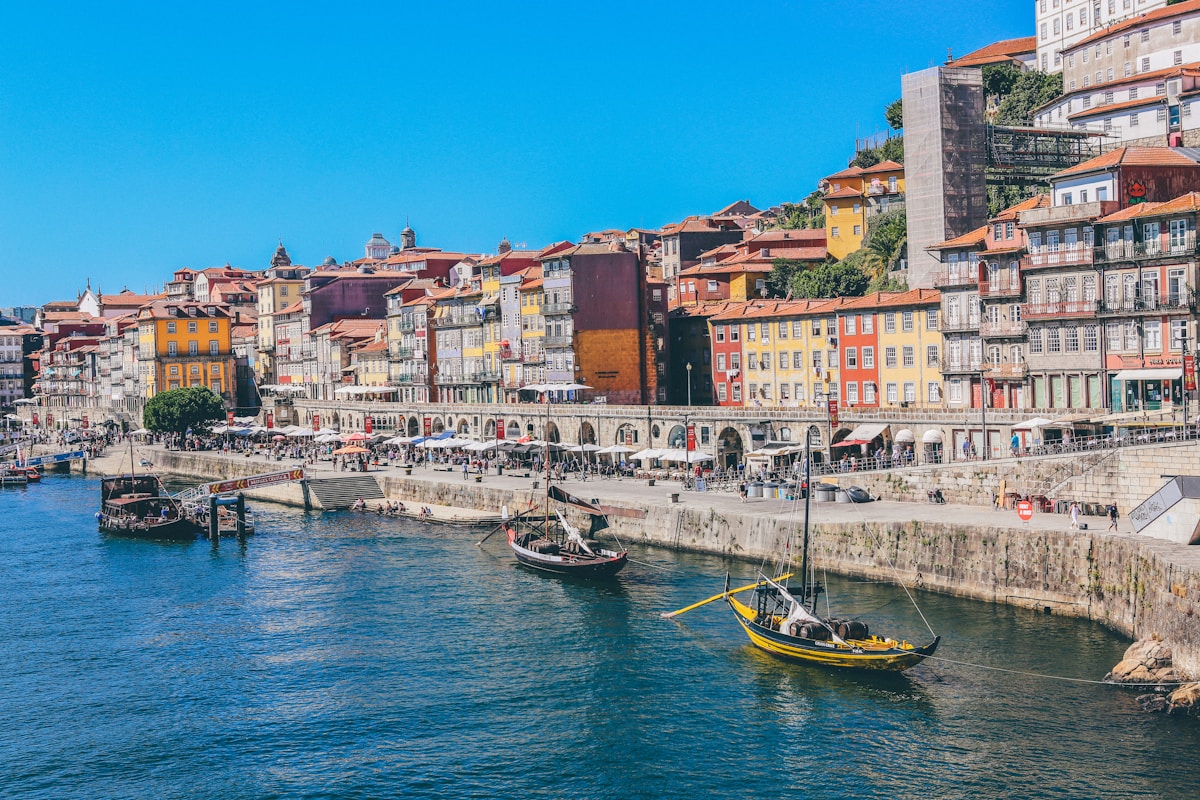
For years, Portugal's Golden Visa was the gold standard of European investor residency programs. Invest in a Lisbon apartment, visit for a week each year, and in five years you could apply for a Portuguese passport, one of the most powerful in the world. The program attracted billions in real estate investment, primarily from Chinese, Brazilian, and American applicants.
Then in October 2023, Portugal pulled the rug. The government's "Mais Habitacao" (More Housing) law eliminated real estate as a qualifying investment route, citing its role in driving up property prices in Lisbon and Porto. Capital transfers were also cut. The move shocked the investor immigration world and prompted predictions that the program was finished.
It wasn't. The Portugal Golden Visa, officially called the Residence Permit for Investment Activity (ARI), remains very much alive. In 2024, Portugal actually issued a record 4,987 Golden Visas, a 72% increase over the previous year. What changed is how you qualify. The program has shifted from a real estate play to a fund investment and cultural donation program. Whether that shift makes it better or worse depends entirely on what you're looking for.
This guide covers the current investment options, realistic costs and timelines, the application process from start to finish, and whether Portugal's path to EU citizenship still justifies the price tag.
What Is Portugal's Golden Visa?
Portugal's Golden Visa is a residency-by-investment program that grants a renewable residence permit to non-EU nationals who make a qualifying investment in Portugal. Launched in 2012, it was designed to attract foreign capital during Portugal's post-financial-crisis recovery. The program is administered by AIMA (Agency for Integration, Migration and Asylum), which replaced the former SEF immigration service in 2023.
What makes the Golden Visa distinctive among European investor programs is its combination of low physical presence requirements and a direct path to citizenship. You need to spend just 7 days in Portugal during the first year and 14 days in each subsequent two-year renewal period. That means you can maintain your Golden Visa residency while living and working anywhere else in the world. After five years, you can apply for permanent residency or Portuguese citizenship, giving you an EU passport with visa-free access to over 186 countries.
The program also extends to family members. Your spouse, children under 26 (if financially dependent), and dependent parents can all be included on your application, making it a genuine family residency solution rather than just an individual permit.
Who Qualifies?
The eligibility criteria for Portugal's Golden Visa are straightforward compared to many immigration programs. The main requirements are:
- You must be a non-EU, non-EEA, and non-Swiss citizen aged 18 or older.
- You must have sufficient funds to make one of the qualifying investments, sourced from outside Portugal.
- You must have no criminal record in Portugal or your country of residence.
- You must maintain valid health insurance covering Portugal.
- You must have no outstanding debts with Portuguese tax or social security authorities.
- Your investment funds must be transferred through a Portuguese bank account, which requires obtaining a Portuguese tax identification number (NIF) first.
There are no language requirements for the Golden Visa itself, no education prerequisites, and no requirement to have a job or business in Portugal. The program is purely investment-based. Language proficiency (A2 level Portuguese) only becomes relevant later if you apply for citizenship at the five-year mark.
Investment Routes: What Actually Works in 2026
Since the October 2023 reforms removed real estate purchases and capital transfers, the remaining qualifying investment routes are more limited but still viable. Here are the active options:
Investment funds are now the most popular route and what the vast majority of new applicants use. The minimum investment is 500,000 euros in a qualifying Portuguese fund regulated by the CMVM (Portuguese Securities Market Commission). The fund must allocate at least 60% of its capital to Portuguese companies and cannot invest in real estate. As of early 2026, approximately 39 funds have been approved for Golden Visa purposes. Fund maturity periods typically range from 5 to 12 years, with annual management fees of 0.2% to 2.5% and potential performance fees of 20% to 50% on returns above benchmark.
Cultural heritage donations offer the lowest entry point at 250,000 euros (or 200,000 euros in designated low-density areas). This is a donation, not an investment, meaning the money is non-recoverable. Your contribution goes to an approved cultural heritage organization or artistic production project. The number of pre-approved projects is limited, which can make this route harder to execute in practice.
Business creation requires either incorporating a company with a capital investment of at least 500,000 euros or creating a minimum of 10 full-time jobs in Portugal (8 in low-density areas). This is the most hands-on route and suits entrepreneurs who genuinely want to build a business in Portugal rather than passive investors.
Scientific research involves a capital transfer of at least 500,000 euros directed toward research activities conducted by Portuguese public or private research institutions. This route is niche and primarily relevant to investors with specific ties to academic or scientific organizations.
Step-by-Step Application Process
The Golden Visa application is not something you handle alone. Portuguese law requires applicants to work with a legal representative in Portugal. Here is the general process:
First, you engage a Portuguese immigration lawyer or advisory firm. Costs for legal representation range from 6,000 to 15,000 euros depending on the complexity of your case and the firm. Your lawyer will guide you through every subsequent step.

Second, you obtain a Portuguese NIF (tax identification number). This requires either visiting Portugal in person or appointing a fiscal representative. The process takes one to two weeks.
Third, you open a Portuguese bank account. This has become more complex in recent years, particularly for US citizens due to FATCA compliance requirements. Expect the account opening process to take approximately one month.
Fourth, you execute your qualifying investment. For fund investments, this means transferring 500,000 euros or more from your foreign bank account to your Portuguese account and then subscribing to a qualifying fund. For cultural donations, you transfer the funds to the approved organization. This step takes one week to six weeks depending on the investment type.
Fifth, your lawyer submits the Golden Visa application through the ARI online portal, along with all supporting documentation: passport, proof of investment, criminal record certificates, health insurance, and proof of accommodation (even a hotel booking suffices).
Sixth, you attend a biometrics appointment at an AIMA office in Portugal. This must be done in person and cannot be completed at embassies abroad.
Finally, AIMA processes and approves your application, and you receive your residence permit card. The permit is valid for two years and renewable for subsequent two-year periods.
Costs: What You'll Actually Pay
The total cost of a Portugal Golden Visa goes well beyond the investment itself. Here is a realistic breakdown for the most common route, the 500,000 euro fund investment:
The investment itself is 500,000 euros minimum. Unlike the cultural donation route, fund investments are not lost money. You can expect returns (or losses) depending on the fund's performance, and the capital is returned at the end of the fund's maturity period (typically 5 to 12 years).
Government fees add up significantly. The initial application fee is approximately 618 euros per applicant. The residence permit card issuance fee is approximately 6,180 euros per applicant. For a family of four, total government fees can reach 25,000 to 28,000 euros across all family members.
Legal fees for a Portuguese immigration lawyer or advisory firm range from 6,000 to 15,000 euros. Fund subscription fees may add 0% to 3.5% of the invested amount upfront, plus annual management fees. Health insurance runs 400 euros or more per year per person. Document authentication, translation, and apostille costs add several hundred euros.
For a single applicant using the fund route, budget approximately 520,000 to 530,000 euros all-in. For a family of four, expect 540,000 to 560,000 euros when including all fees and costs.
Timeline: How Long Does It Take?
The honest answer is: longer than you want. Portugal's Golden Visa processing has slowed considerably due to AIMA's backlog.
The preparation phase, from engaging a lawyer through obtaining your NIF, opening a bank account, and executing the investment, takes roughly two to four months.
Application submission through the ARI portal and receiving a biometrics appointment currently takes five to eight months. This is where the backlog hits hardest, as AIMA has been working through a queue of over 45,000 pending applications.
After the biometrics appointment, final approval and card issuance takes another six to eight months. Some applicants have reported total processing times stretching to 24 months or longer.
The total realistic timeline from starting the process to holding your residence permit card is 12 to 24 months. This is substantially longer than the program's official targets and reflects the strain on Portugal's immigration infrastructure following the SEF-to-AIMA transition.
Renewal happens every two years, requiring a fresh application with updated documents and a biometrics appointment. The renewal process itself is faster but still requires planning around AIMA's scheduling.
Portugal's Golden Visa vs. Alternatives
With Spain having officially ended its Golden Visa program in April 2025, Portugal faces less direct European competition. The main alternatives are:
Greece still offers a real estate-based Golden Visa, with investment thresholds starting at 250,000 euros in less-developed areas and rising to 800,000 euros in Athens, Thessaloniki, and popular islands. Greece's program has no minimum stay requirement at all, but the path to citizenship is much longer (7 to 12 years) and requires passing an interview in Greek, a substantially harder language barrier than Portugal's A2 requirement. Greece does not allow Golden Visa holders to work in the country.
Italy offers a residency-by-investment program with a minimum of 250,000 euros for innovative startups or 500,000 euros for Italian companies. Processing is generally faster, but Italy's path to citizenship takes 10 years of legal residence, double Portugal's timeline.
Portugal's competitive advantage remains the combination of minimal stay requirements, a five-year path to citizenship with only an A2 language requirement, and a Portuguese passport that ranks among the top five globally. The trade-off is the current processing delays and the shift away from tangible real estate investments toward fund-based routes.
Common Pitfalls to Avoid
Based on community experiences from forums like Nomad Gate and immigration advisory reports, the most frequent mistakes applicants make include:
- Working with firms that still market real estate investment as a viable Golden Visa route. Real estate was eliminated in October 2023, and any advisor pushing it is either outdated or dishonest.
- Underestimating processing times. Any firm claiming approval in under 12 months should be viewed skeptically given AIMA's current backlog.
- Failing to verify that a fund is actually CMVM-approved for Golden Visa purposes. Not all Portuguese investment funds qualify, and the 60% Portuguese company allocation requirement must be met.
- Letting documents expire before submission. Criminal record certificates must be obtained within 3 months of your application, and originals are required at biometrics appointments that may occur years after initial filing.
- Neglecting the NIF and bank account process. US citizens in particular face complications with Portuguese banks due to FATCA compliance. Start this process early and expect delays.
- Assuming the investment is purely passive. Fund investments carry real market risk. Returns are not guaranteed, and fund management fees can erode returns over a 5 to 12 year holding period.
- Ignoring the physical presence requirement. While minimal (7 days in year one, 14 days per two-year period), missing these visits can jeopardize your renewal and citizenship eligibility.
Is the Portugal Golden Visa Right for You?
The Portugal Golden Visa makes the most sense for a specific type of applicant: someone with at least 500,000 euros in investable capital, a desire for EU residency and eventual citizenship, and no intention of living full-time in Portugal in the near term. The program's minimal stay requirement is its strongest feature, allowing you to maintain your current life and business while building a path to one of the world's most valuable passports.
If you are looking for a lower-cost entry to Portuguese residency and plan to actually live in Portugal, the D7 Passive Income Visa (starting from approximately 760 euros per month in passive income) or the Digital Nomad Visa (for remote workers earning approximately 3,480 euros per month) are far more accessible options without any investment requirement.
The key question is whether the current processing delays and the shift from real estate to fund investments change the calculus. For investors comfortable with a 12 to 24 month wait and a fund-based approach, the program remains one of the most efficient paths to EU citizenship available globally. For those who wanted to buy a Lisbon apartment and get residency as a bonus, that door has closed.
Explore Portugal's full range of visa options, from the Golden Visa to the D7 and Digital Nomad routes, in our visa explorer. Compare with other European countries to find the route that fits your situation.
Related Visa Routes
Explore More Visa Routes
Discover visa pathways that match your profile and goals.
Open Visa Explorer →